

Mind-Blowing Prenatal Development Facts: 12 Astonishing Large Numbers in Fetal Cells, Organs, and Functions Revealed
Are you curious about prenatal development facts that prove the preborn is far more than “just a clump of cells”? In this in-depth guide, we explore fetal development large numbers—from trillions of cells to billions of neurons—highlighting the wonders of embryonic development stages. Whether you’re an expectant parent searching for pregnancy week by week insights or a science enthusiast diving into human embryo biology, these statistics will amaze you. Based on cutting-edge prenatal biology research, we’ll break down how these massive figures drive fetal growth and development. Perfect for YouTube videos on embryo wonders or Google searches on amazing fetal facts—let’s uncover the miracle of life in the womb!
What Are Prenatal Development Large Numbers and Why Do They Matter?
Prenatal development begins at conception and involves explosive growth, with fetal cells multiplying at rates that rival the universe’s scale. These large numbers in fetal development—like 3.2 billion DNA base pairs or 100 trillion atoms per cell—illustrate the precision and complexity of human embryonic stages. Far from random, they showcase fine-tuned processes essential for survival. If you’re researching fetal macrosomia causes or simply want week-by-week fetal development facts, understanding these numbers debunks myths and reveals the awe-inspiring reality of preborn biology wonders.
3.2 Billion Base Pairs: The Ultimate Genetic Blueprint in Every Fetal Cell
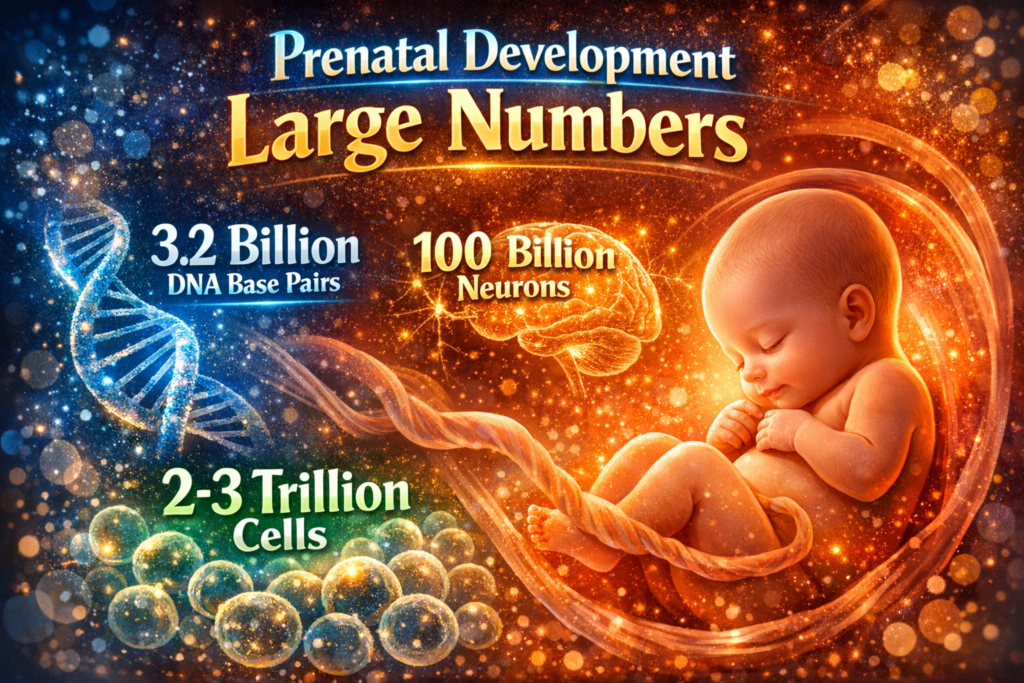
From day one in the zygote stage of embryonic development, each cell holds about 3.2 billion base pairs of DNA. This genetic code directs all prenatal growth stages, from cell division to organ formation. Precision is key—one glitch could cause issues, emphasizing the intricate design in fetal DNA facts.
10 Million Ribosomes: Powering Protein Production in Embryonic Cells
In every cell during early fetal development, up to 10 million ribosomes act as protein factories. These tiny structures translate DNA into life’s building blocks, fueling rapid embryonic cell growth and function— a must-know for pregnancy biology enthusiasts.
100 Trillion Atoms and 37 Sextillion Reactions: The Hidden Frenzy in Fetal Cells
A single fetal cell contains roughly 100 trillion atoms, enabling 37 sextillion (37,000 × 10¹⁸) chemical reactions per second. This microscopic activity drives metabolism and repair in prenatal cell development, showcasing the energy behind human embryo wonders.
20,000–25,000 Genes: Directing Fetal Organ Formation and Survival
Humans have 20,000–25,000 genes across the genome, with 8,000–15,000 active in the placenta by mid-pregnancy. These genes produce proteins for fetal organ development and nutrient transport, vital for thriving in the womb—key prenatal genetics facts for parents.
200,000 Neurons Per Minute: Explosive Brain Growth in Early Gestation
During weeks 3–20, the fetal brain generates 200,000–250,000 neurons per minute at peak. This builds networks for cognition and senses, a highlight of embryonic brain development stages and fetal neurology facts.
100 Billion Neurons: Building the Foundation for Fetal Thoughts and Reflexes
By late pregnancy, the brain has 100 billion neurons, enabling early sensory responses. This massive count is central to fetal brain facts and lifelong function in human development biology.
3–38 Billion Cells in the Forebrain: Rapid Expansion for Cognitive Skills
The neocortex grows from 3 billion cells at 13 weeks to 38 billion by term, supporting sound and movement processing. A prime example of fetal forebrain development and prenatal cell proliferation facts.
2–3 Trillion Cells Total: From One Zygote to a Viable Fetus
Starting as one cell, the fetus reaches 2–3 trillion cells by term through division. This enables all fetal organ functions, a staggering embryonic growth statistic for pregnancy development guides.
4–5 Trillion Red Blood Cells: Oxygen Delivery at Hyper-Speed
By term, trillions of red blood cells—produced 10x faster than in adults—fuel fetal oxygen needs. Essential for energy in prenatal blood development facts.
50–60 Million Heartbeats: The Tireless Rhythm of Fetal Circulation
From week 4, the heart racks up 50–60 million beats by term, circulating nutrients. A core fetal heart development fact preparing for birth.
Billions of Synapses: Wiring the Fetal Brain for Learning and Reflexes
From week 12, billions of synapses connect neurons, facilitating reflexes. Key to embryonic neural network facts and post-birth adaptation.
6–7 Million Egg Cells: Prenatal Preparation for Future Reproduction
Female fetuses peak at 6–7 million eggs by 20 weeks, securing reproductive potential—a forward-thinking fetal ovary development wonder.
These prenatal development large numbers reveal a symphony of sophistication in fetal biology. For more amazing pregnancy facts or YouTube embryo development videos, subscribe and share! What surprises you most about human fetal growth stages? Comment below.
Female fetuses peak at 6–7 million eggs by 20 weeks, securing reproductive potential—a forward-thinking **fetal ovary development wonder**.
These **prenatal development large numbers** reveal a symphony of sophistication in **fetal biology**. A growing number of staunch non-theistic biologists are declaring there must be a mind directing all of this. They are calling it the immaterial-genome. Christians have another name for the Designer.
————————————–