

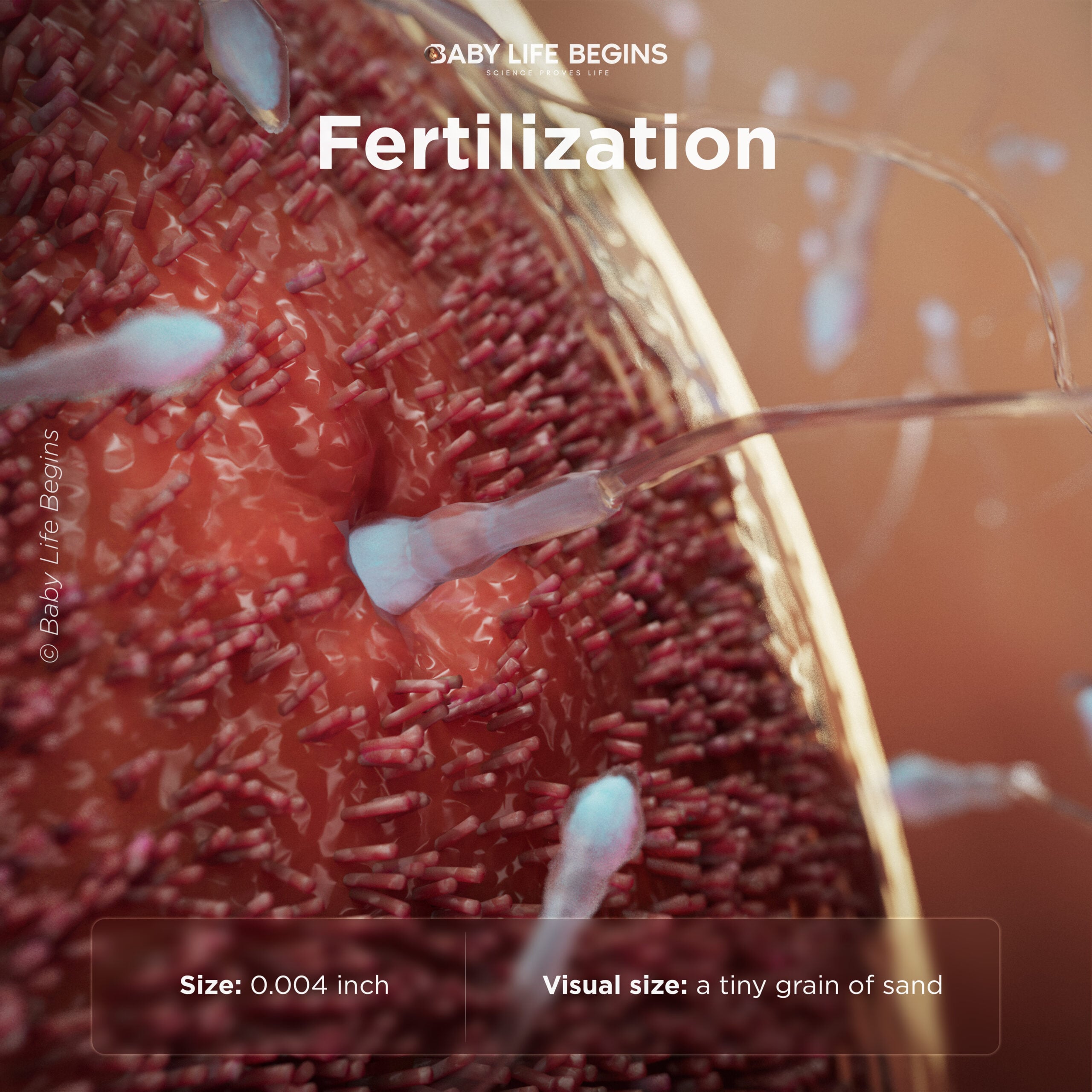
Fertilization
Life begins when a single sperm cell meets the egg. In this moment, a brand-new, unrepeatable human being is created - with his or her own DNA, sex, and genetic blueprint already in place.
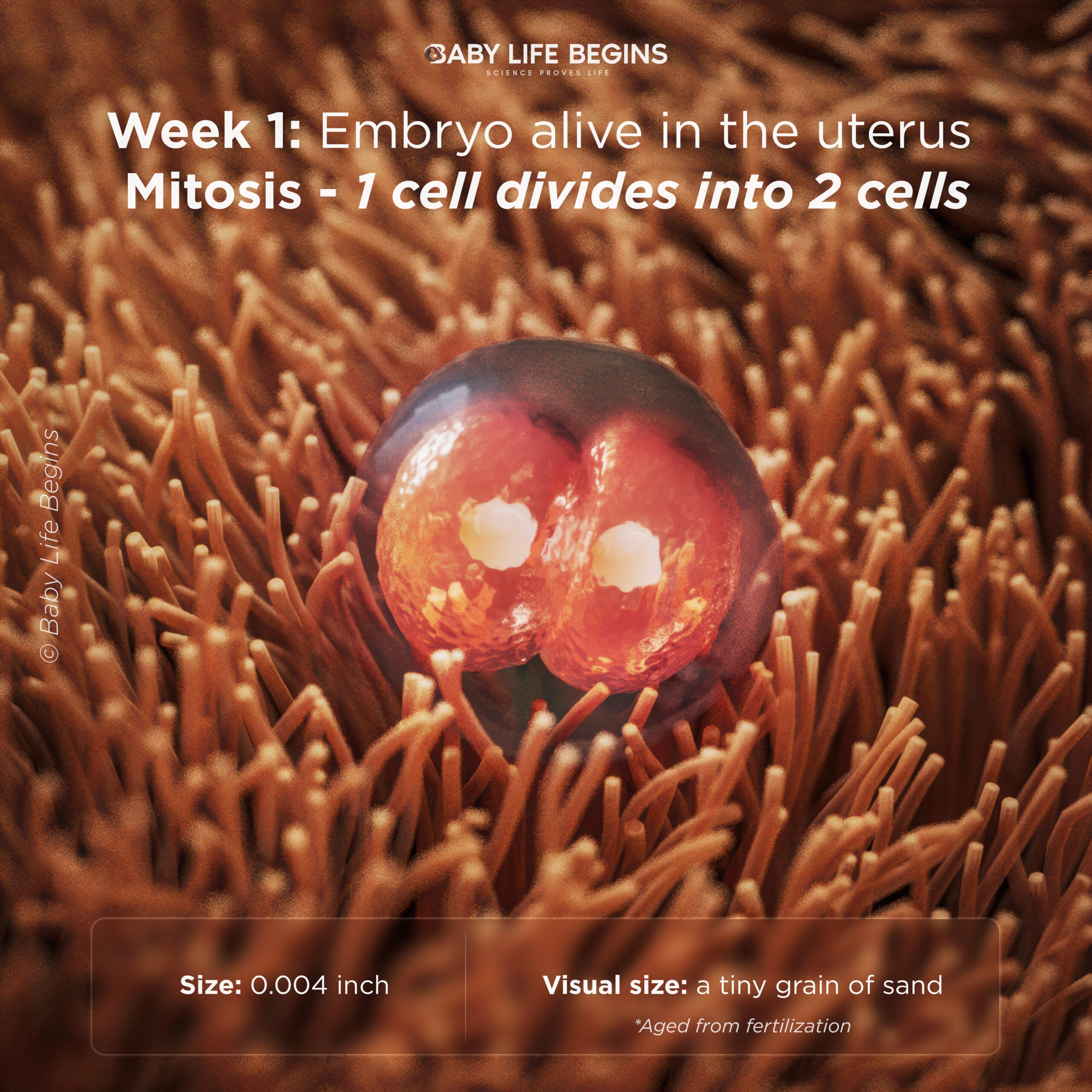
Mitosis
Life multiplies with breathtaking precision. During mitosis, the very first human cell copies its entire DNA and divides into two identical cells — each containing the same full genetic blueprint. This is the first moment of growth, when the new life begins increasing in size and complexity, one division at a time.
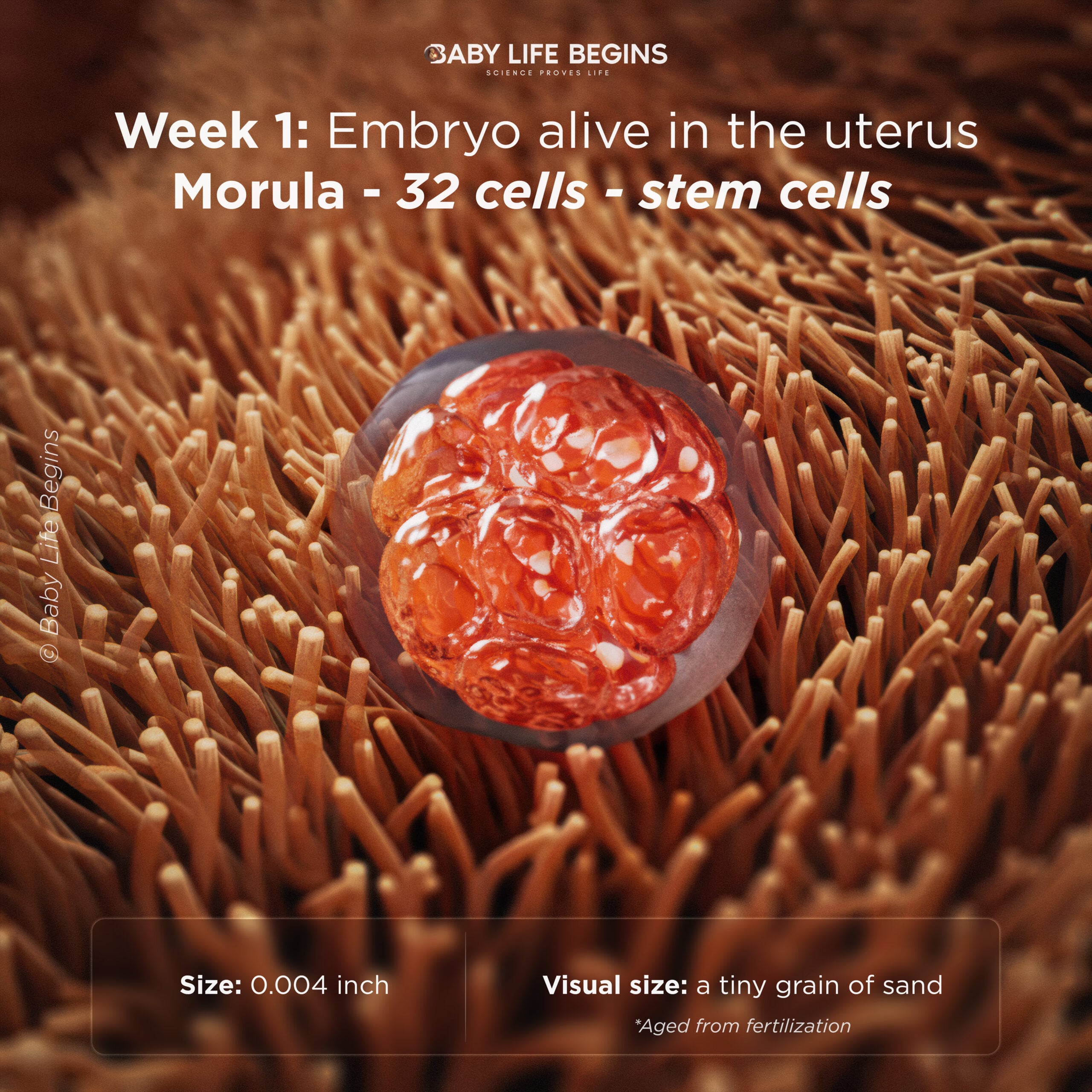
Morula — 32 cells made of stem cells
Just days after fertilization, the growing baby becomes a morula — a compact sphere of about 32 cells. These cells are all stem cells, meaning they can become any part of the body: brain, skin, heart, organs, and more. The tiny human is already preparing the building blocks for every system needed for life.
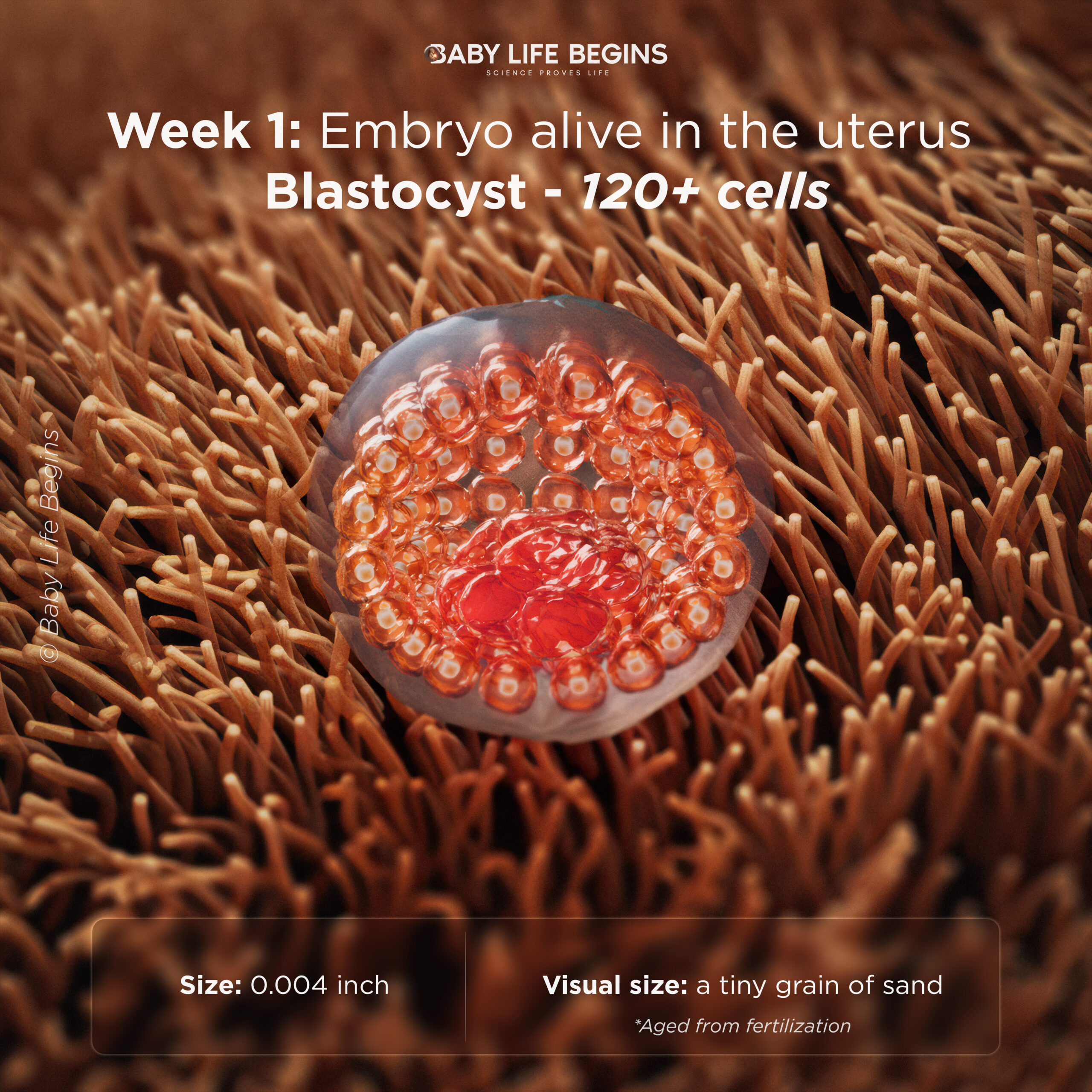
Blastocyst — 120+ cells
As the cell count rises above 120, the baby enters the blastocyst stage. Here, the tiny human begins forming two essential groups of cells: • Inner cell mass — which will become the baby's entire body • Outer layer — which will later form the placenta and support life in the womb The baby is now ready to implant securely into the mother’s uterus.
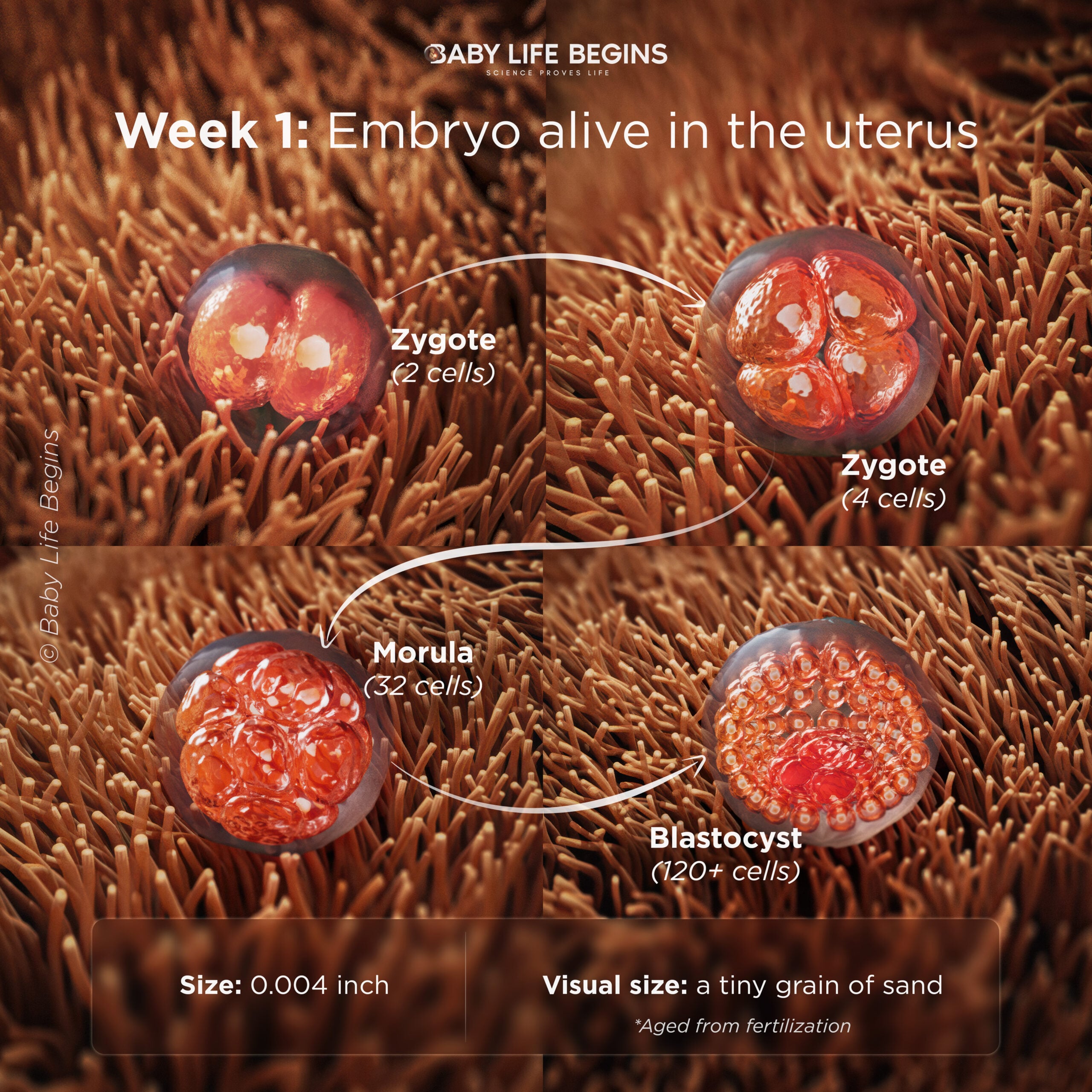
Early Human Development — From Zygote to Blastocyst
This image shows the remarkable journey of the first week of life: • Zygote — A single, complete human cell with a full DNA code • Morula — Rapid cell division forming a compact sphere • Blastocyst — Over 120 cells beginning to specialize In just a few days, a brand-new human being goes from one cell to a highly organized, rapidly developing living embryo.
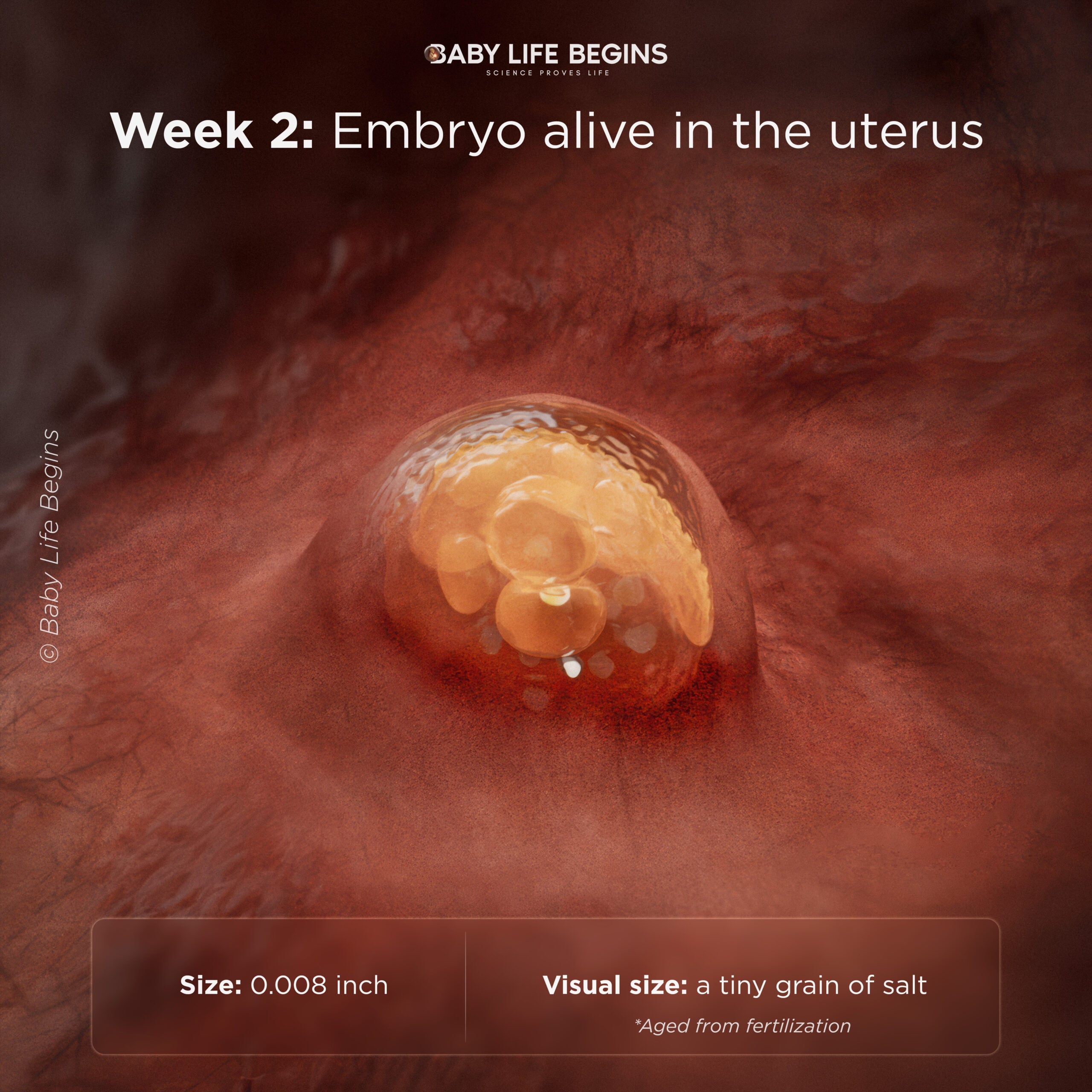
Week 2: Embryo alive in the uterus
By the end of week 2, the tiny embryo has implanted in the uterus and is already receiving nourishment. Though smaller than a grain of rice, this new life is growing rapidly.
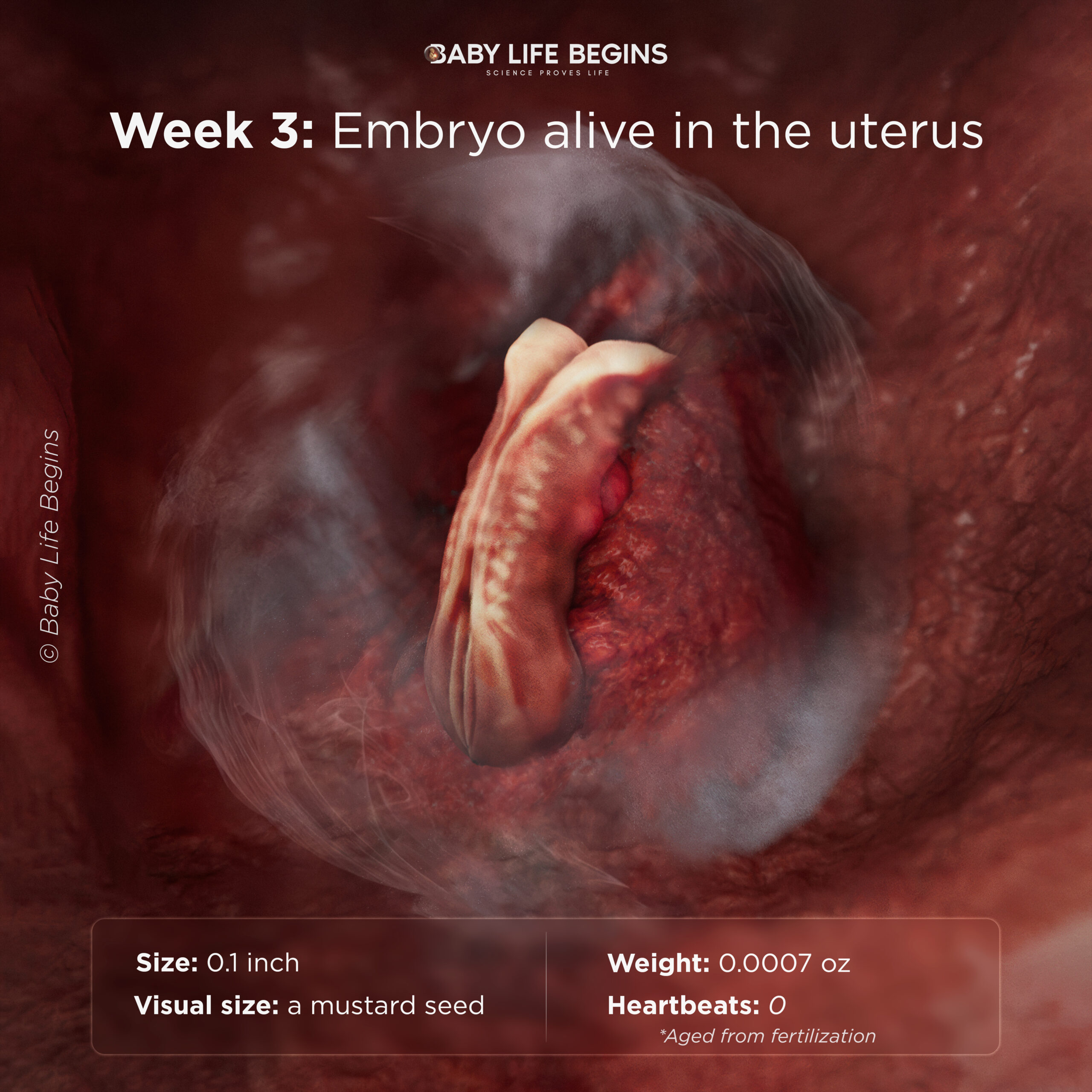
Week 3: Early Human Development
During Week 3, amazing things are happening inside the womb — things no one can see from the outside, but God is carefully designing every detail.
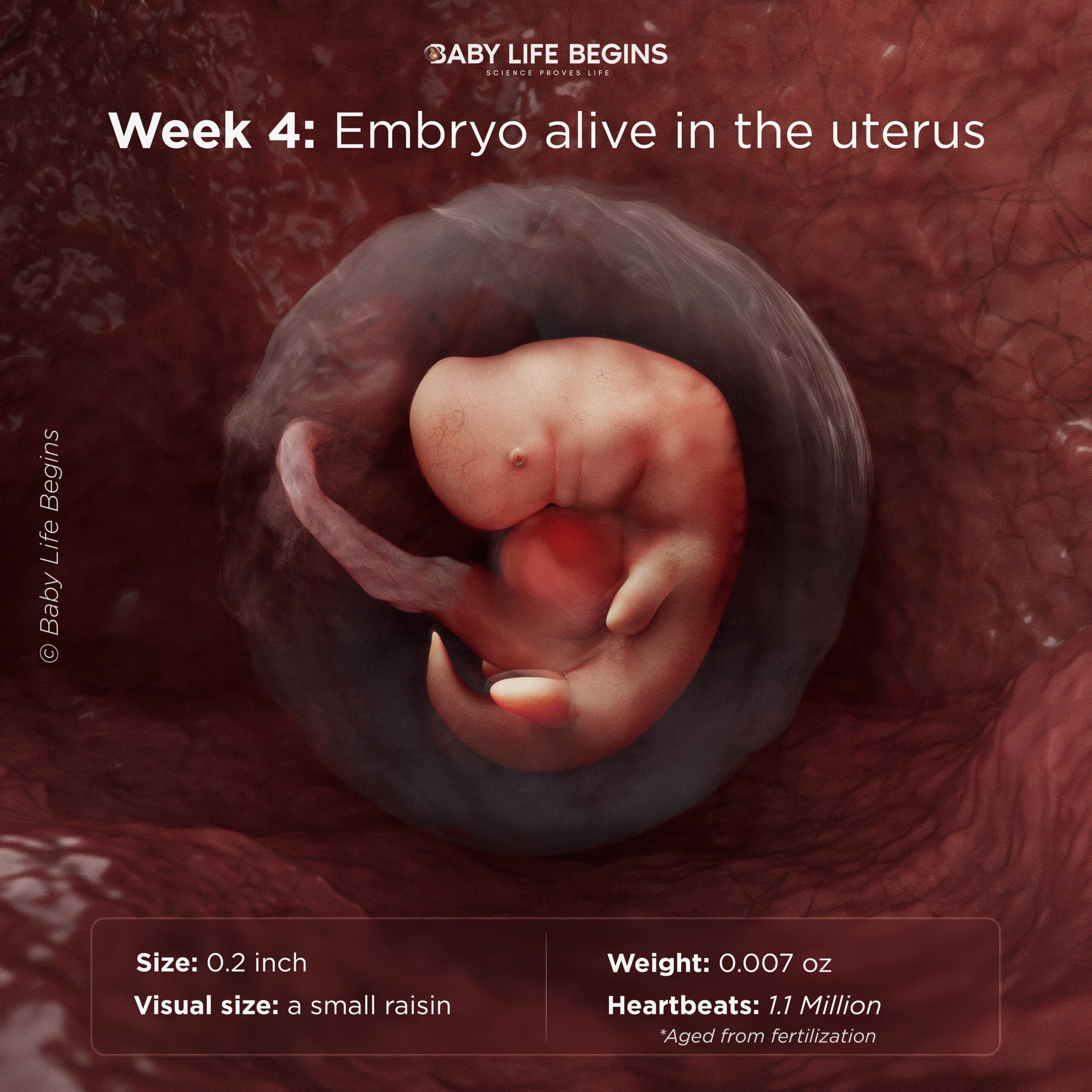
Week 4: Heart begins to beat
Around week 4, the baby’s heart begins to beat — often before a mother even knows she is pregnant. Blood is already circulating through a tiny, developing body.
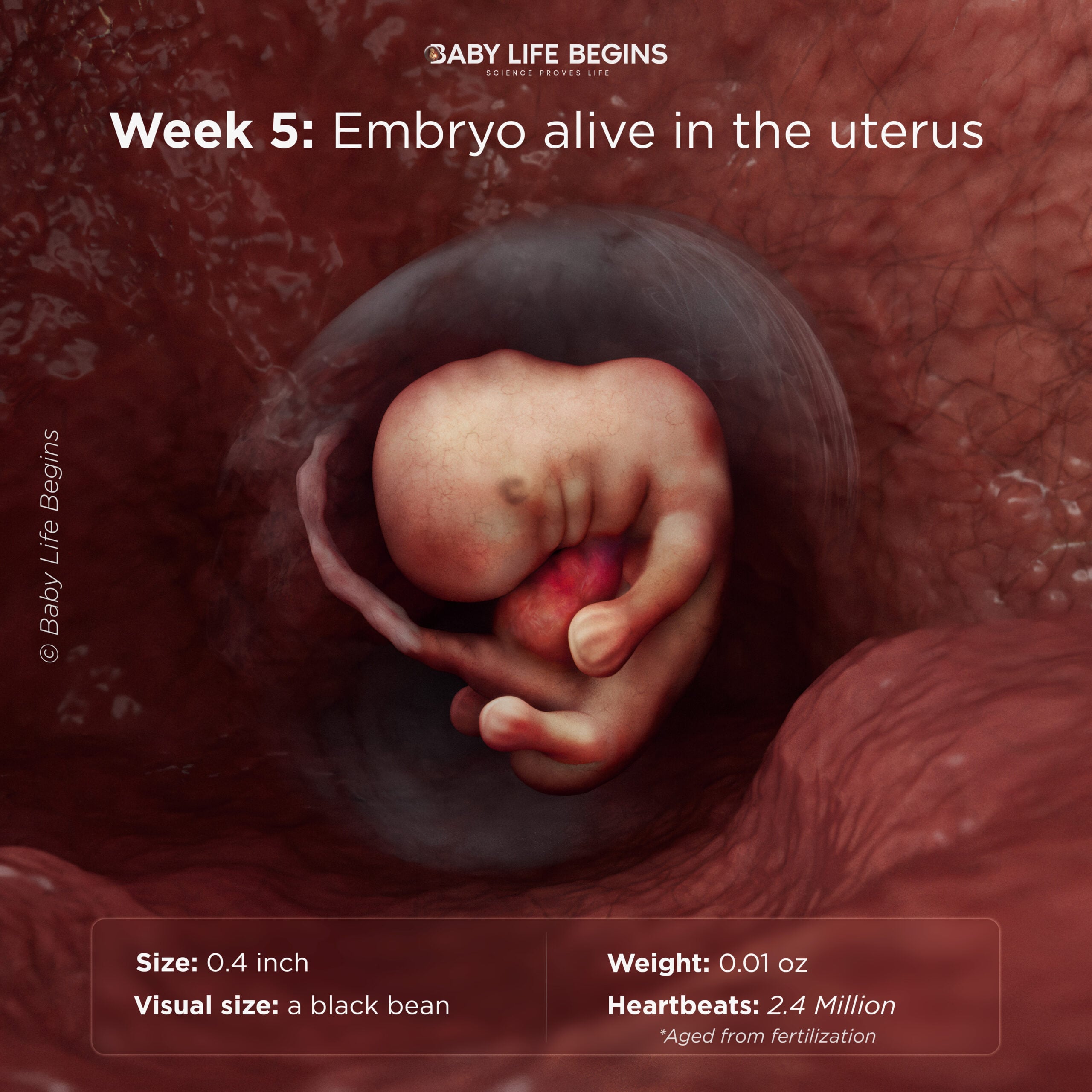
Week 5: The First Heartbeat
At week 5, the tiny baby’s heart begins to form and starts beating for the very first time — a steady rhythm that will continue for life. The beginnings of the brain, spinal cord, and major organs also start to take shape as the baby grows quickly each day.
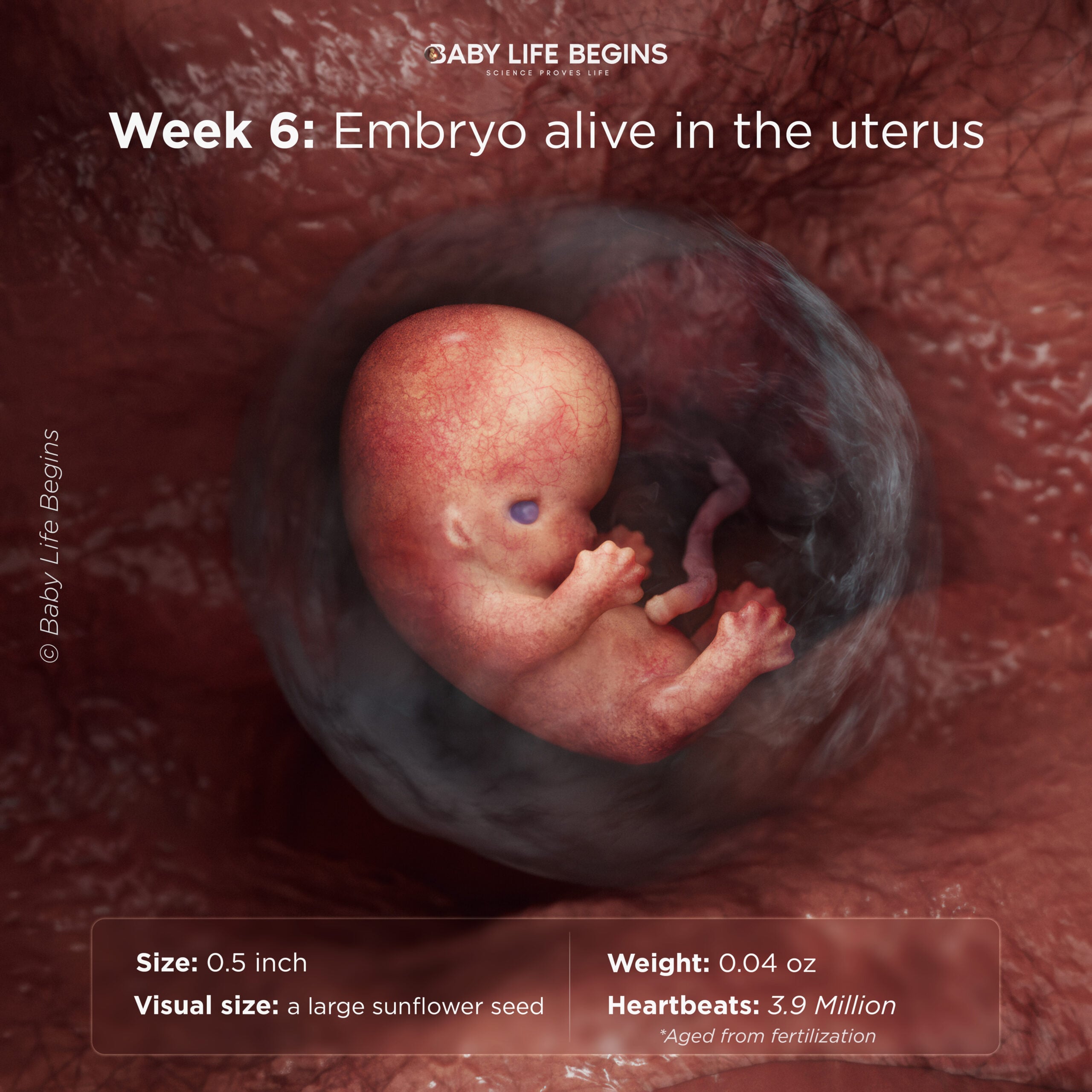
Week 6: A Face Begins to Form
During week 6, the baby’s face starts taking shape. Small dark spots appear where the eyes will be, and tiny pits mark the early ears. The brain is developing rapidly, and the baby’s heart is now beating much stronger and more regularly.
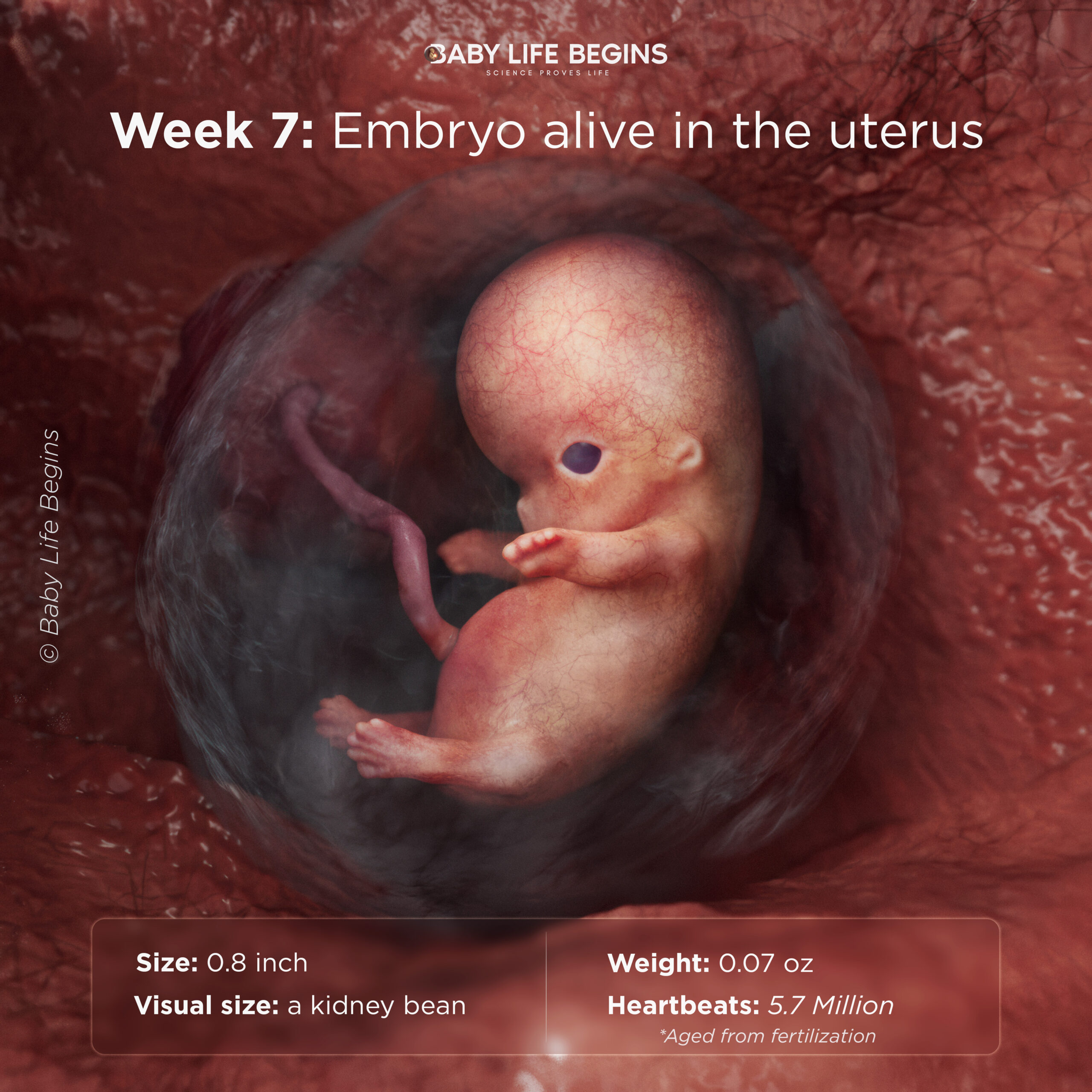
Week 7: Starting to Look Like a Little Person
By week 7, the baby’s arms and legs grow longer, and tiny buds appear where hands and feet will form. The brain, heart, and organs continue developing at an amazing pace. Even though the baby is still very small, their body is becoming more recognizable every day.
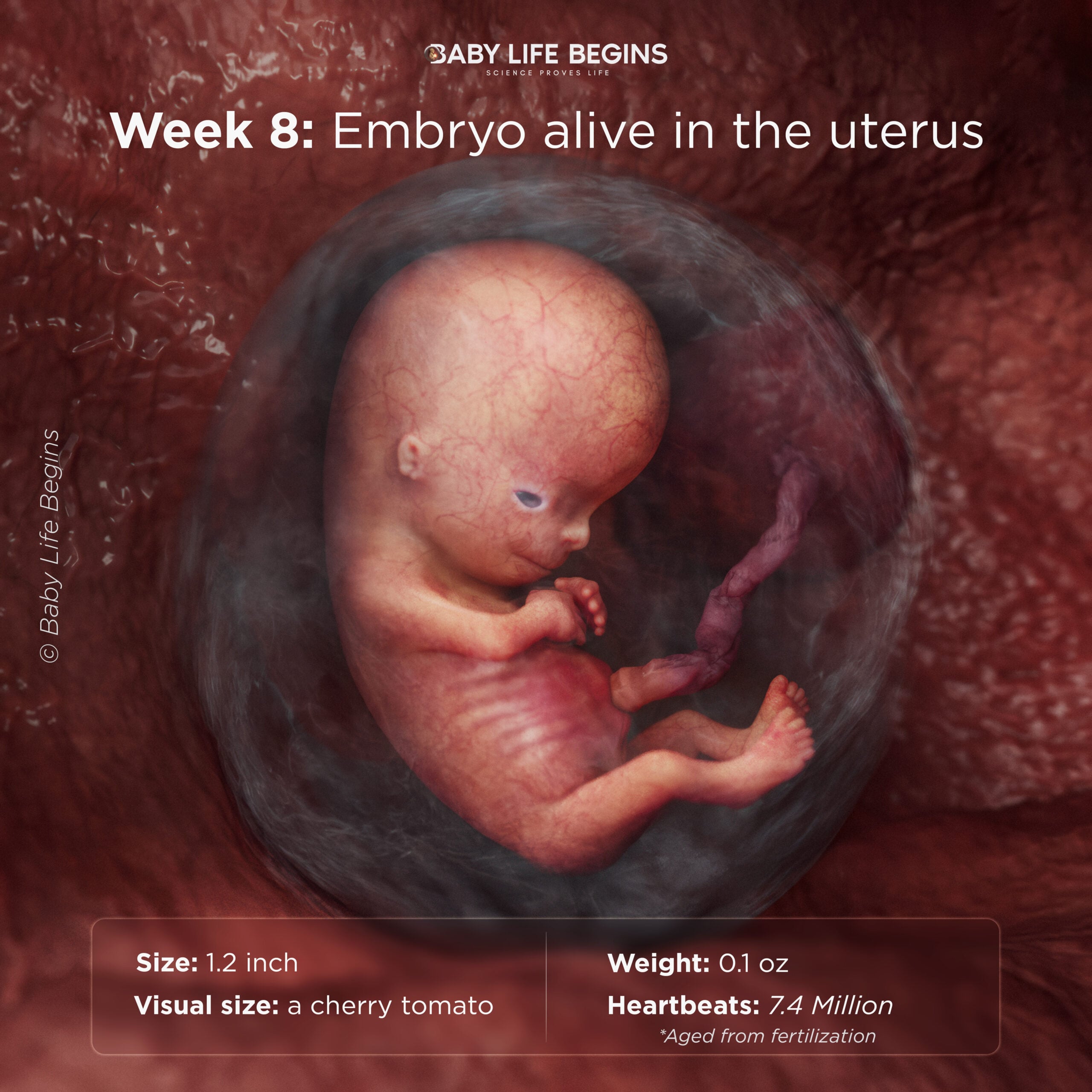
Week 8: Embryo alive in the uterus
By week 8, fingers, toes, and facial features are forming. The baby can bend at the elbows and may already be moving inside the womb.
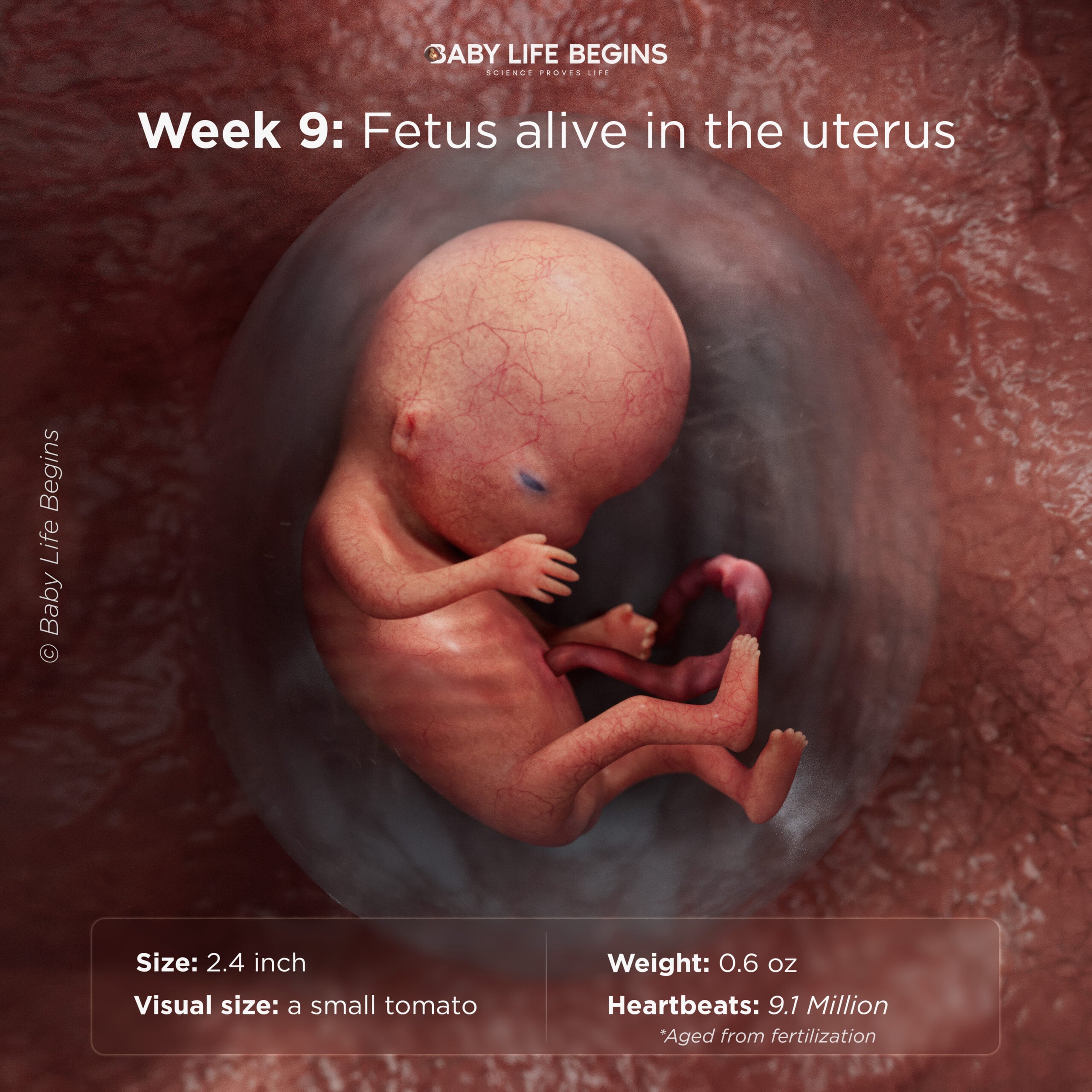
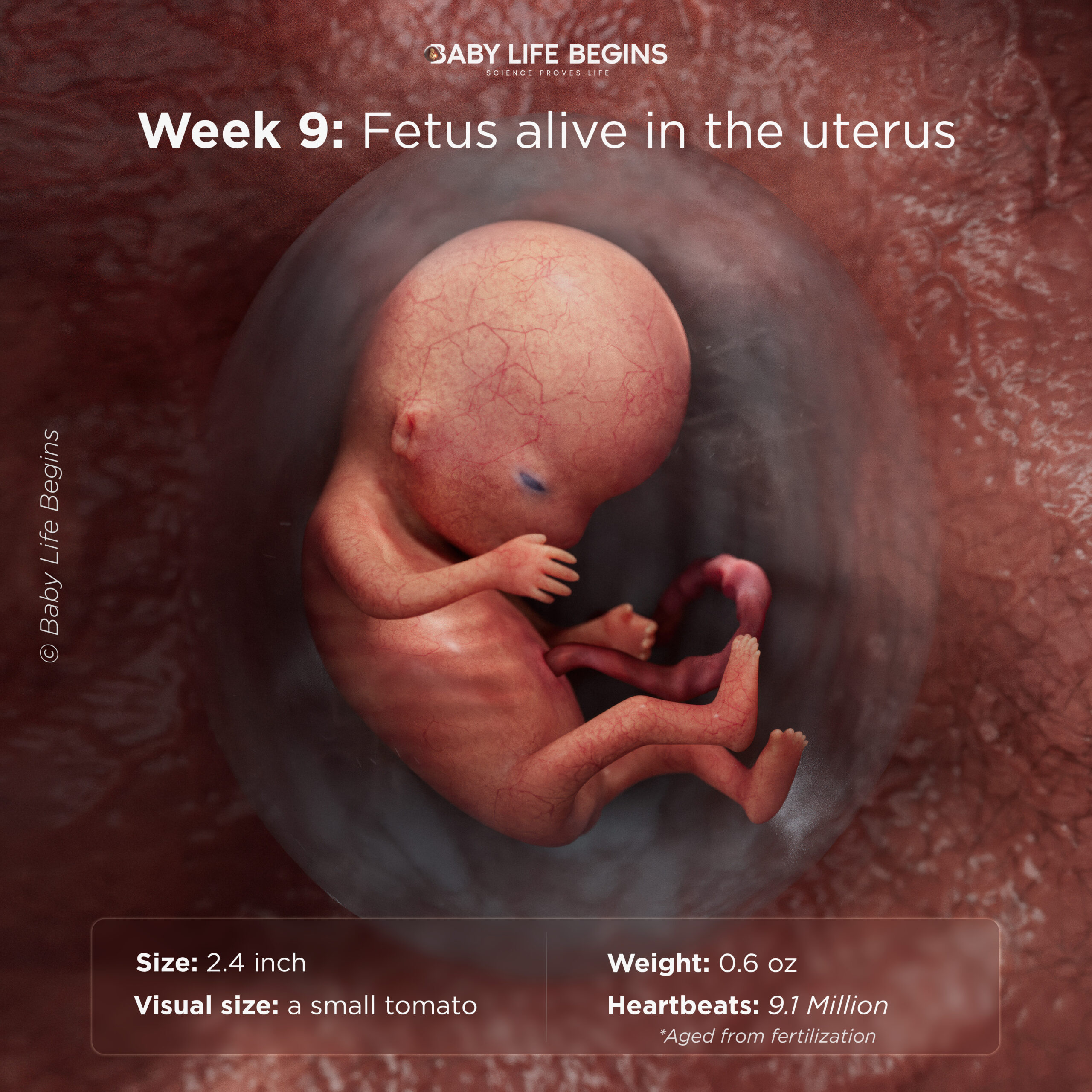
Week 9: Fingers, Toes, and Facial Features Form
At nine weeks, the baby’s face develops more detail: eyelids, nostrils, and a small nose become noticeable. Fingers and toes separate, and the baby can make tiny spontaneous movements.
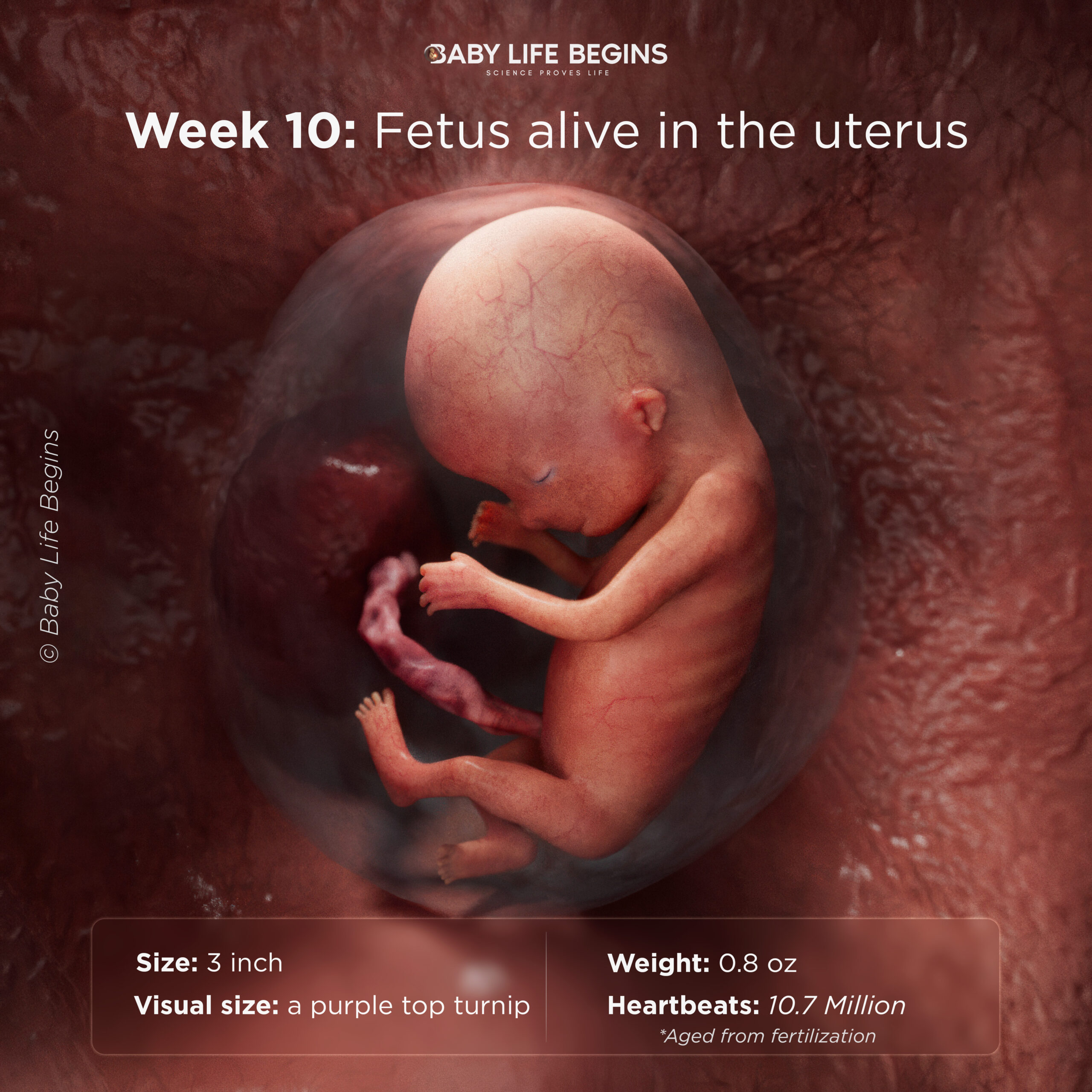
Week 10: The Baby Can Bend Arms and Legs
By week ten, the baby has fully formed arms and legs with bending joints. Fingernails begin to appear, and vital organs — like the kidneys, brain, and liver — are working together in coordination.
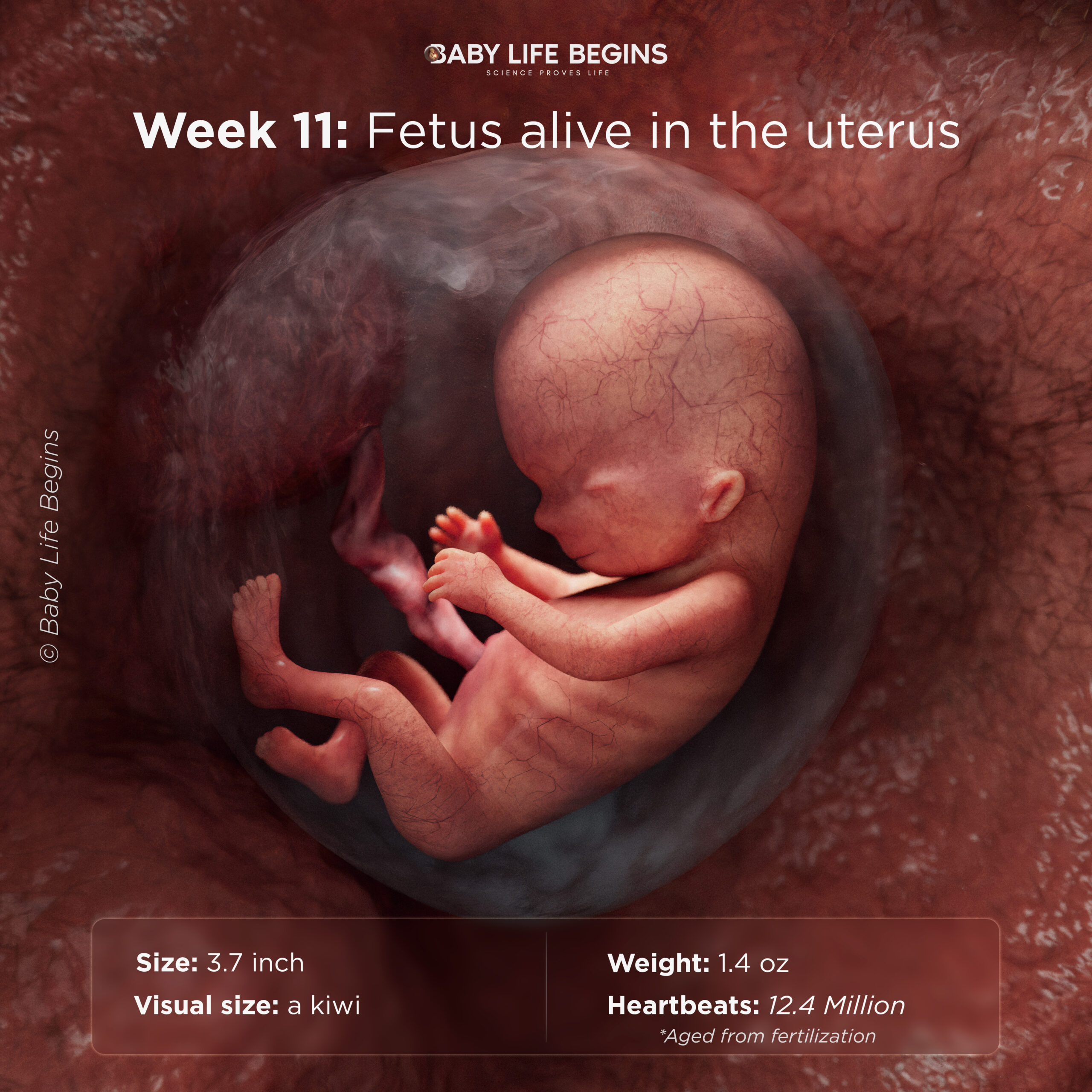
Week 11: The Baby Can Move and Stretch
At eleven weeks, the baby’s body is more coordinated. They can stretch, yawn, and move freely inside the womb. The bones begin to harden, and the baby now looks more like a tiny human with a defined profile.
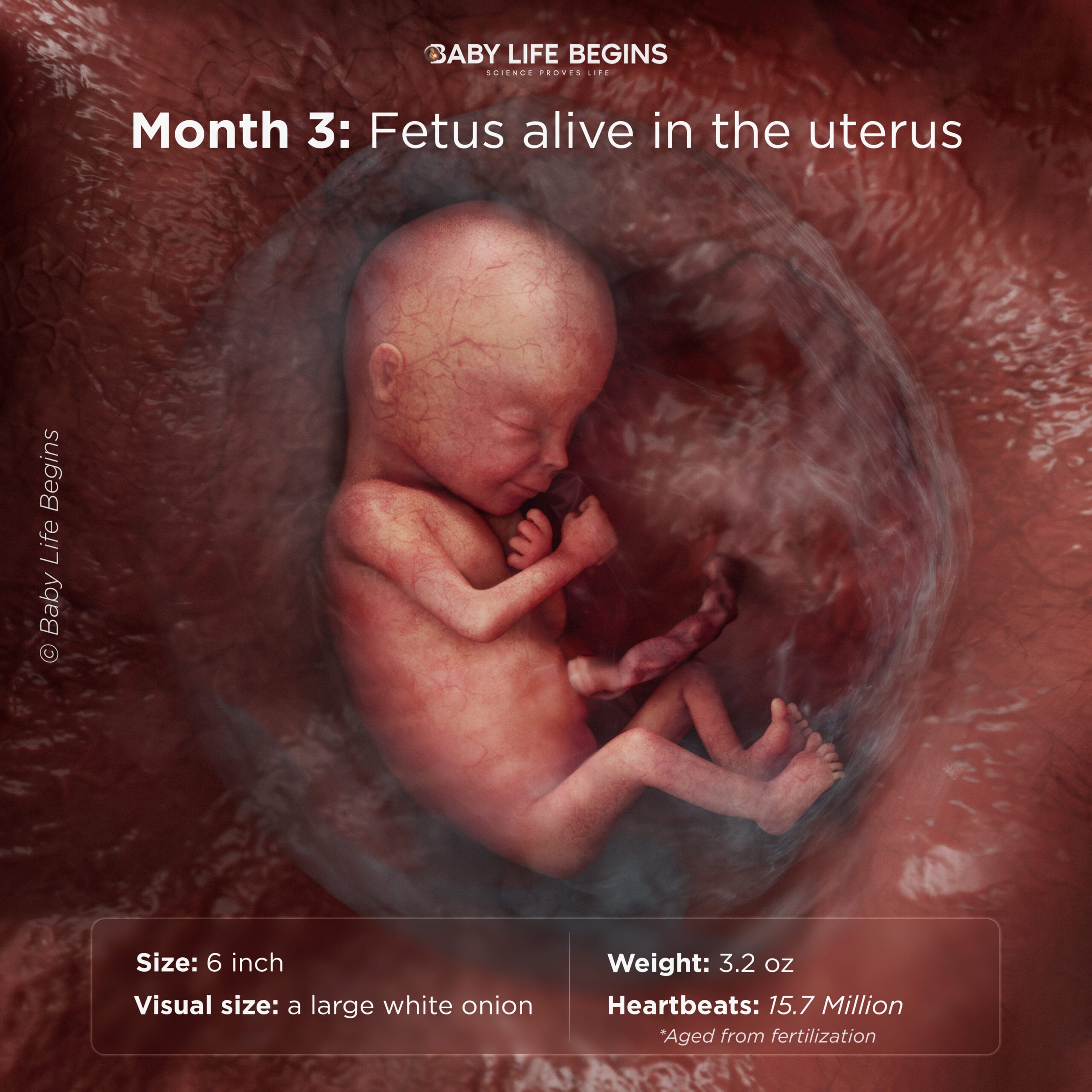
Month 3: Fetus active in the womb
By the third month, the baby’s tiny body is now clearly recognizable. The eyelids, ears, and nose take shape, and the fingers and toes are fully formed. Internal organs like the liver, kidneys, and intestines are beginning to function. Although still small, the baby now moves freely, curling, stretching, and responding to touch.
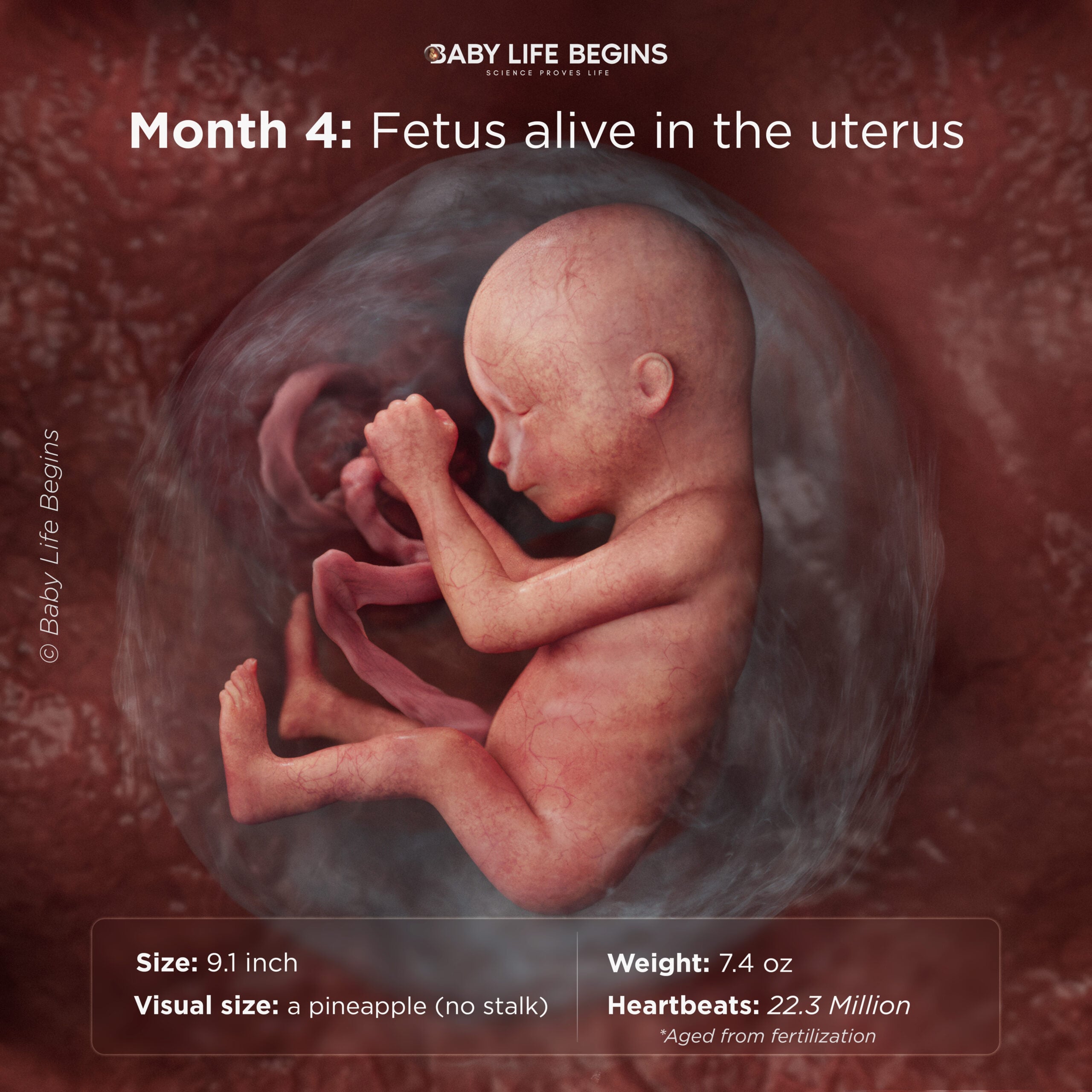
Month 4: Movements Become Stronger & Features Sharpen
During the fourth month, the baby grows rapidly and becomes more active. Facial expressions appear, including squinting and smiling. Bones harden, fingerprints form, and the heartbeat is strong and steady. Hair begins to grow on the head and eyebrows, giving the little one more definition.
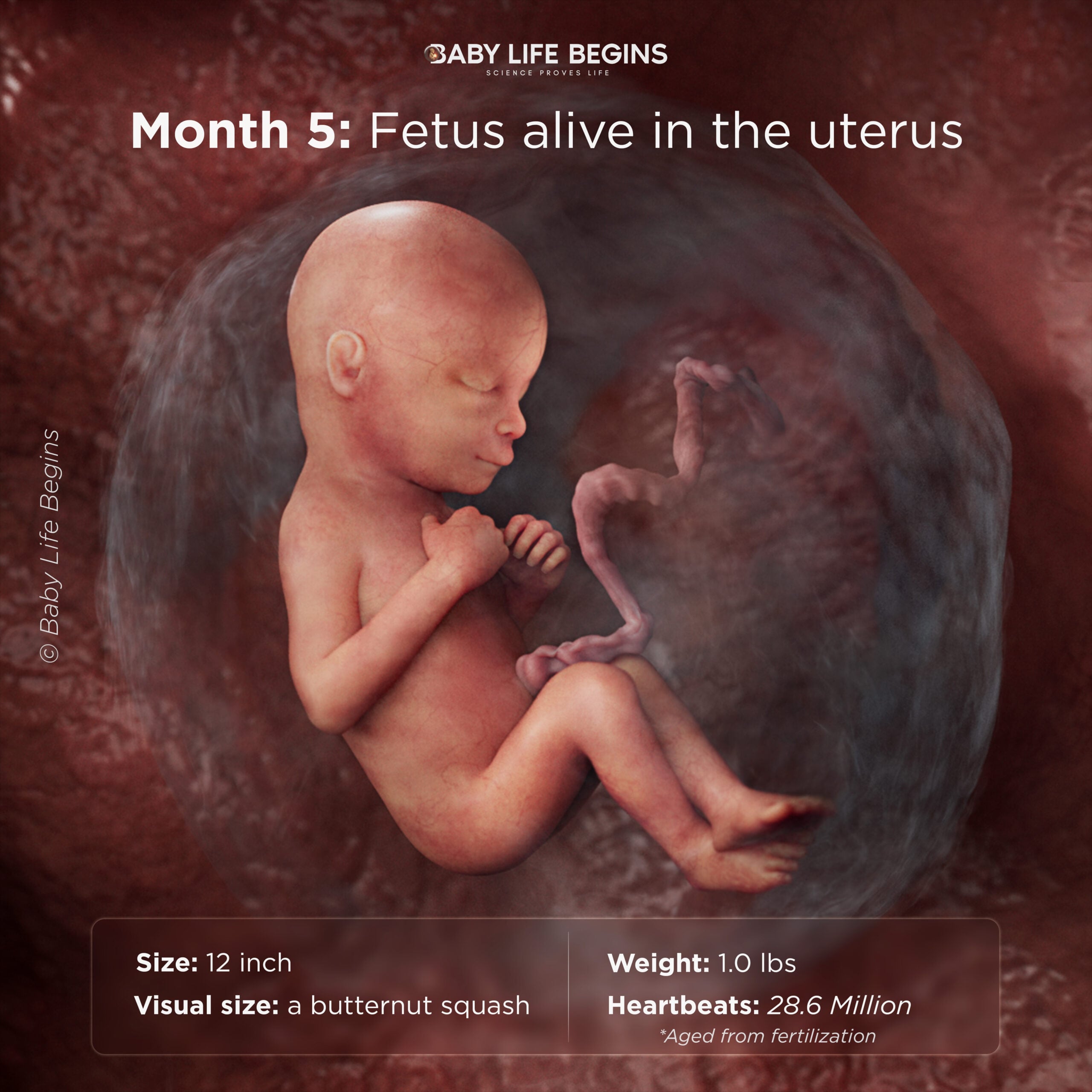
Month 5: Growing and responsive
By the fifth month, the baby can respond to sound and light. Hair, eyebrows, and tiny eyelashes begin to appear as the body continues to grow.
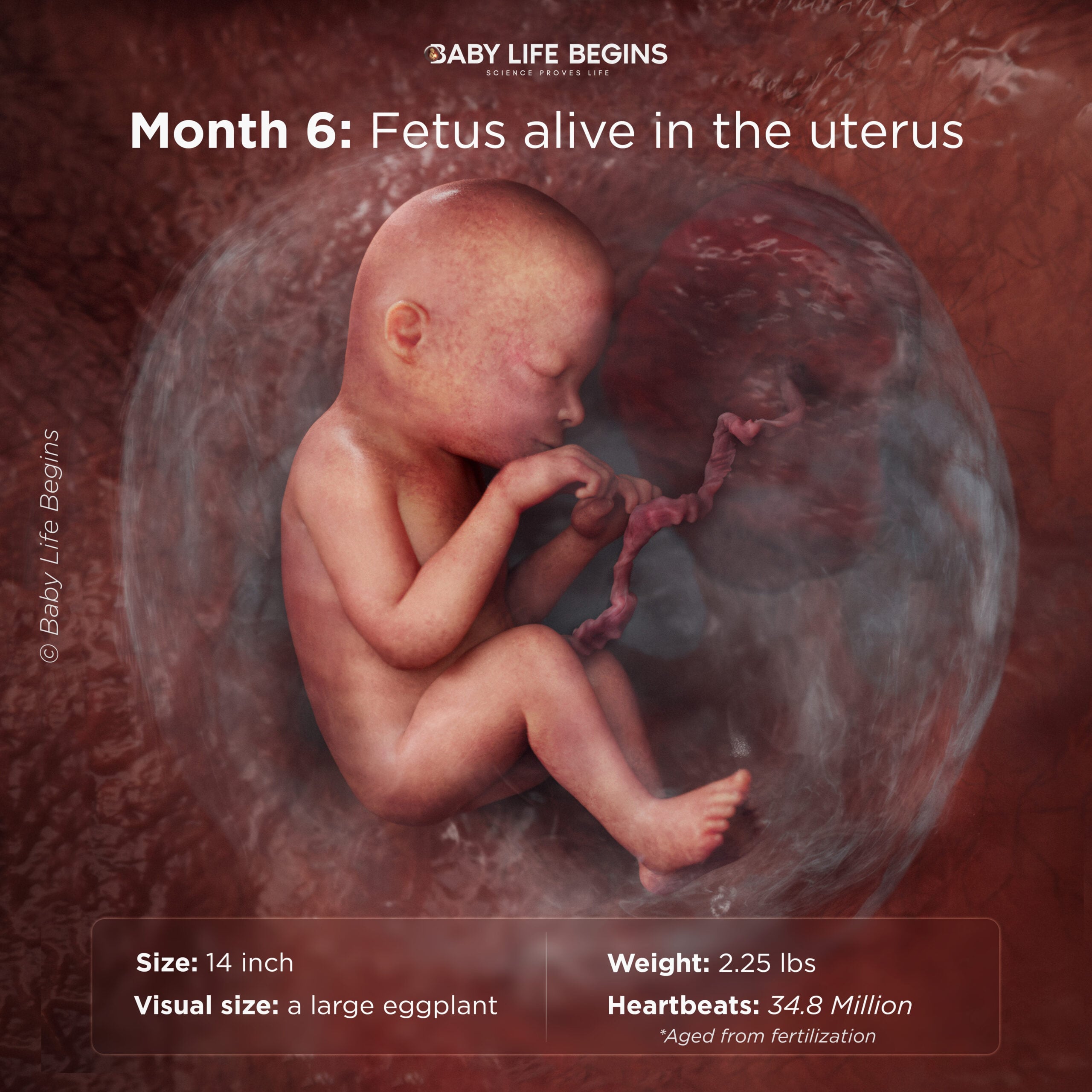
Month 6: Hearing, Breathing Practice, and Awake/Sleep Cycles
At six months, the baby can now hear voices, music, and sounds from outside the womb. They practice “breathing” by moving amniotic fluid in and out of their lungs. Eyes begin to open for the first time, and the baby develops regular sleep and wake cycles. The nervous system becomes more active, helping with movement and reactions.
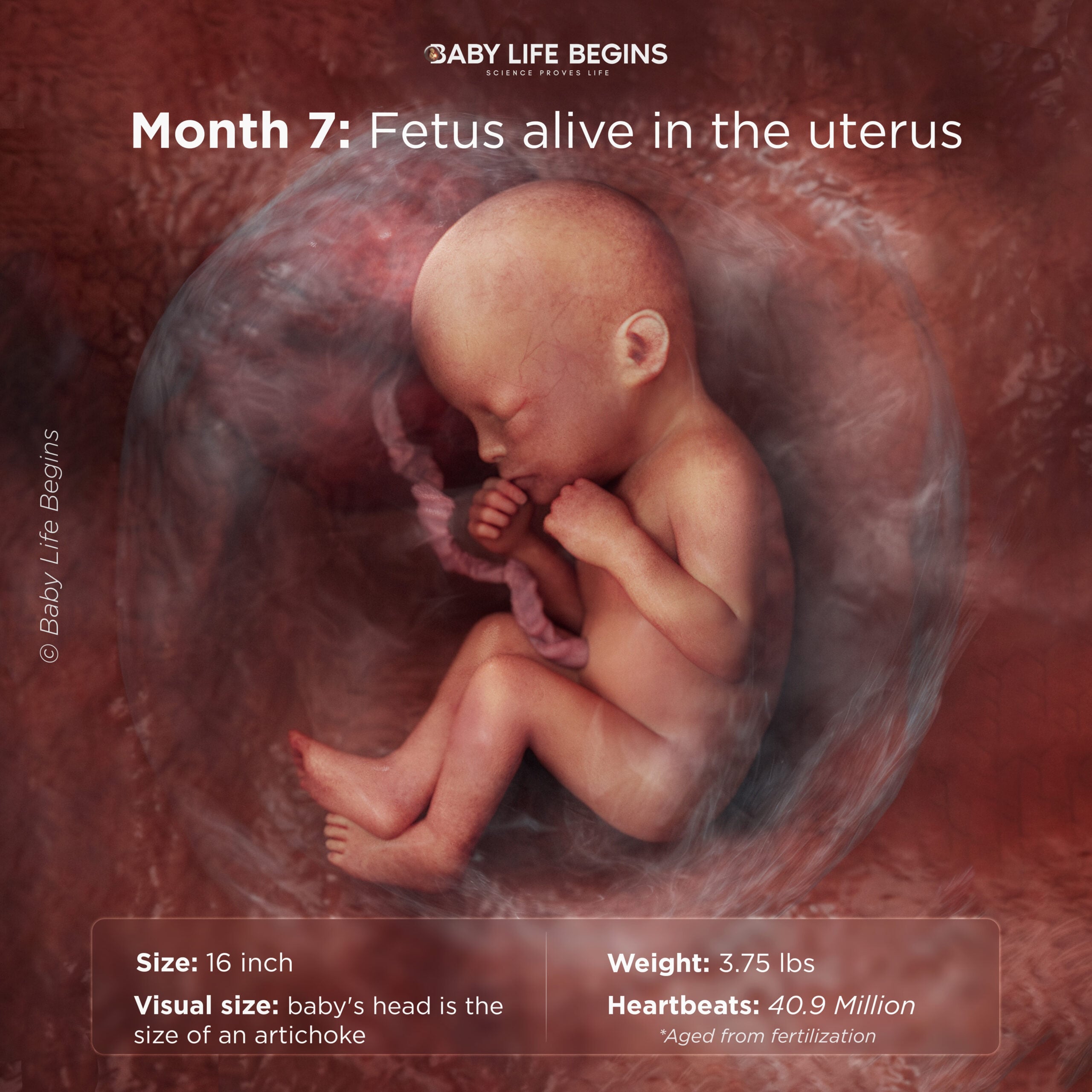
Month 7: Hearing, Breathing Practice, and Awake/Sleep Cycles
The seventh month brings incredible brain development—billions of connections form rapidly. The baby can see light through the womb, turn toward sounds, and recognize voices. Fat begins to form under the skin, giving the baby a more rounded, healthy appearance. The arms and legs are now strong, and movements become more coordinated.
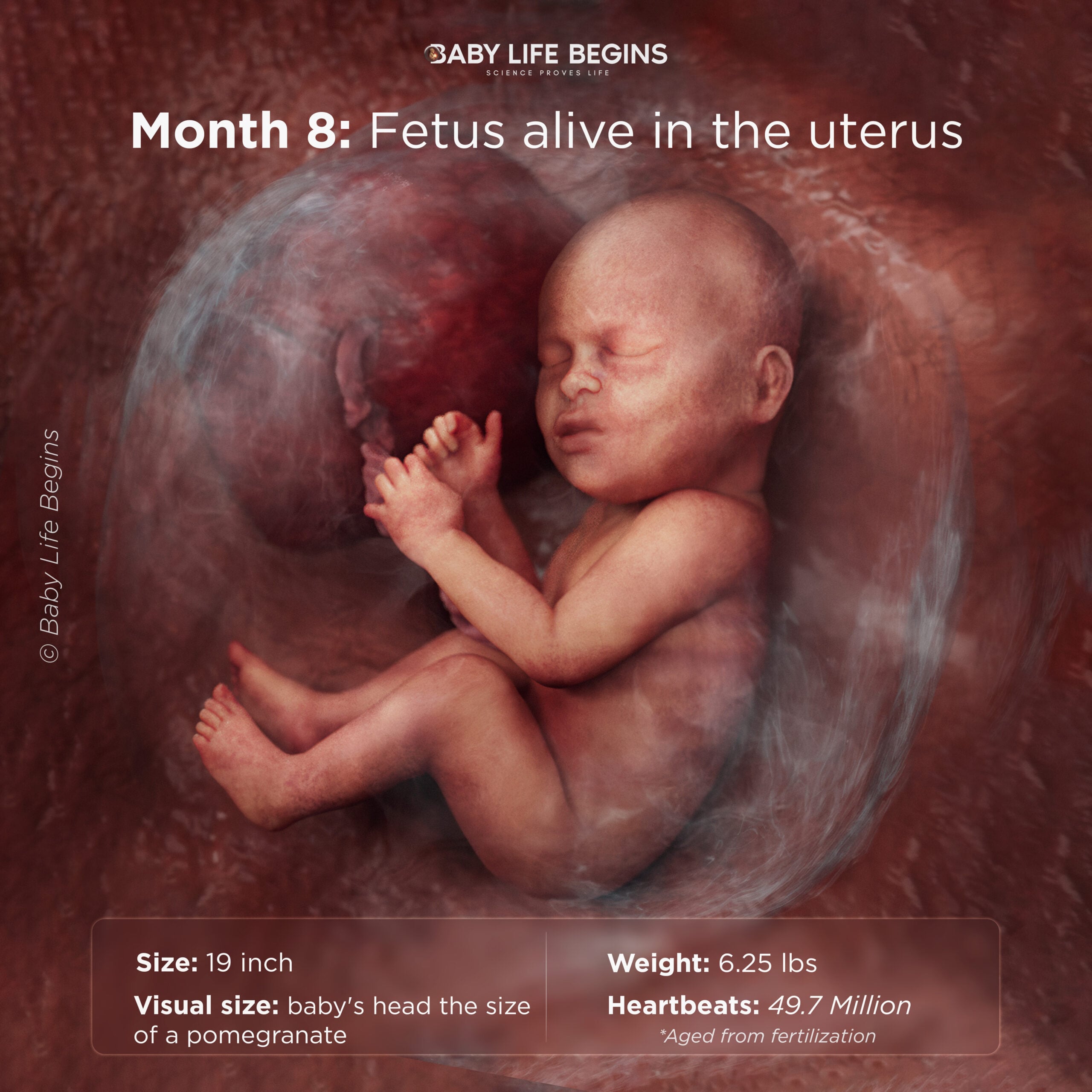
Month 8: Preparing for Birth, Strong Kicks & Fully Formed Organs
By the eighth month, most organs are fully developed except the lungs, which continue maturing. The baby fills out with more fat, gaining weight quickly. Kicks become powerful, and the baby starts turning into a head-down position. The brain continues rapid development, helping regulate temperature and breathing.
Month 9: Ready for Life Outside the Womb
In the final month, the baby’s lungs fully develop, and the brain completes essential connections. The baby now responds strongly to voices, touch, and light. Weight gain continues, and the skin becomes smooth and soft. When ready, the baby settles low in the pelvis, preparing for birth — the miracle moment is near.